
Das Gespräch, das du schon lange führen willst.The conversation you’ve wanted to have for a long time.
Das Buch ist, was bleibt. Das Gespräch ist, was geschieht: vier Nachmittage, an denen du die Fragen stellst, die sonst ein Leben lang ungestellt bleiben.The book is what remains. The conversation is what happens: four afternoons of asking the questions that otherwise stay unasked for a lifetime.

Mehr als Erinnerungen sammeln.More than collecting memories.
Fragen, die sonst nie gestellt werden. Im Alltag fragt niemand: Wovor hattest du Angst, als du so alt warst wie ich? Der Rahmen dieser Gespräche gibt euch beiden die Erlaubnis dazu.Questions that otherwise never get asked. In everyday life, nobody asks: what were you afraid of when you were my age? The frame of these conversations gives you both permission to.
Verstehen statt nur wissen. Du kennst die Stationen. Aber kennst du die Gründe? Nach vier Gesprächen verstehst du Entscheidungen, über die du dich vielleicht jahrelang gewundert hast.Understanding instead of just knowing. You know the stations. But do you know the reasons? After four conversations, you understand decisions you may have wondered about for years.
Zeit, die selbst zur Erinnerung wird. Sechs Stunden ungeteilte Aufmerksamkeit füreinander, ein Geschenk, das es im Erwachsenenleben sonst kaum noch gibt.Time that becomes a memory itself. Six hours of undivided attention for each other, a gift that hardly exists in adult life anymore.
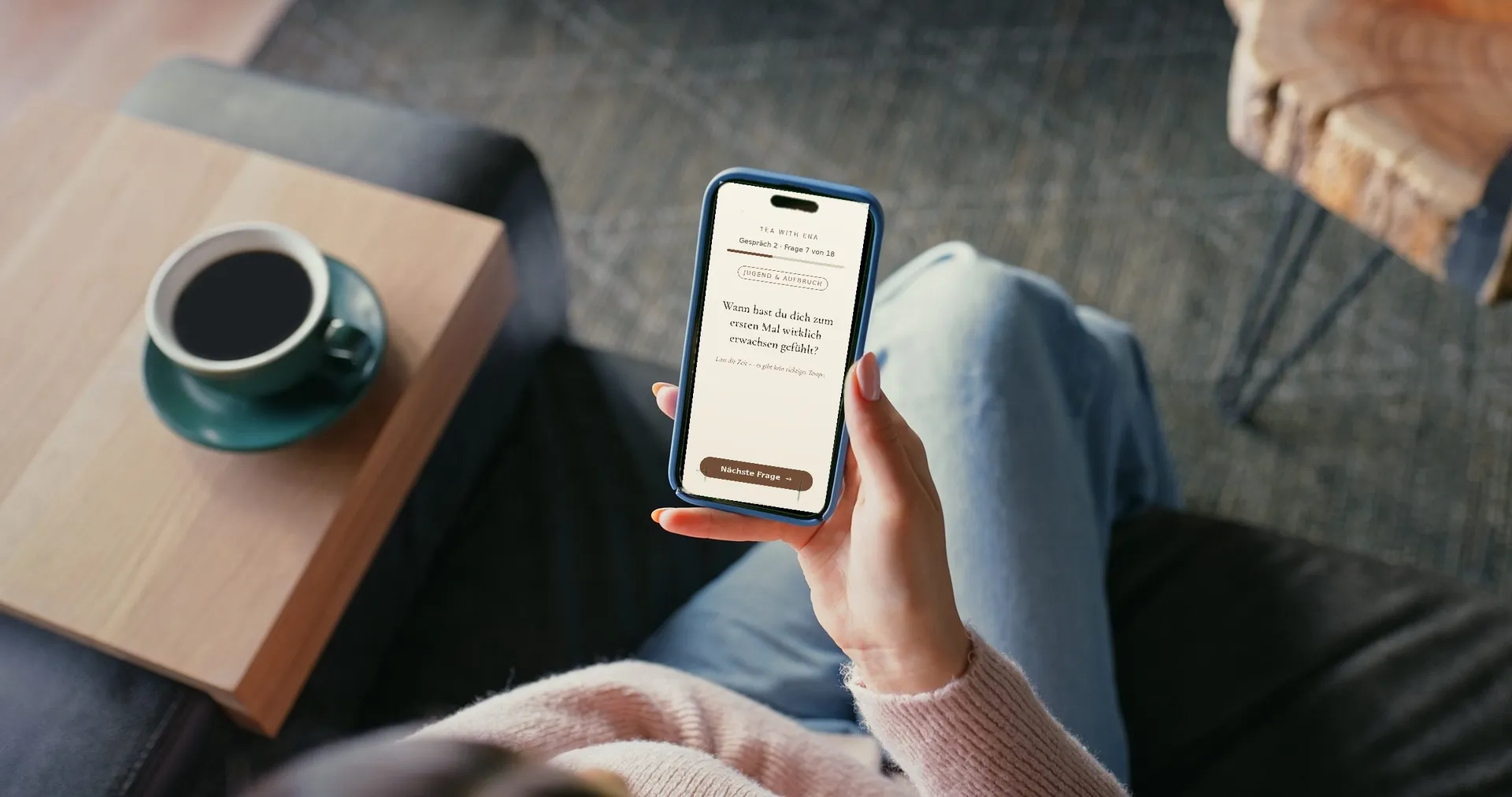
Wir machen dich zum professionellen Interviewer.We turn you into a professional interviewer.
Aufgebaut auf einer eigenen Datenbank aus über 500 professionellen Biografie-Fragen führt dich unser Leitfaden Frage für Frage durch jedes Gespräch, auf deinem Handy, immer eine Frage im Blick.Built on our own database of more than 500 professional biography questions, our guide leads you question by question through every conversation, on your phone, one question in view at a time.
Du musst nichts auswendig können und nichts erfinden. Du musst nur zuhören. Und wenn dein Mensch irgendwohin abbiegt, wo keine Frage hinreicht: Folg ihm. Der Leitfaden wartet, bis ihr zurück seid.You don’t need to memorise or invent anything. You only need to listen. And when your loved one turns somewhere no question can reach: follow them. The guide waits until you’re back.
Nach den ersten beiden Gesprächen bauen wir den Leitfaden neu, um das herum, was eure Geschichte bereits gezeigt hat.After the first two conversations, we rebuild the guide around what your story has already revealed.
Vier Gespräche, ein Bogen.Four conversations, one arc.
Jedes Gespräch dauert etwa 90 Minuten. Die Leitfäden für die Gespräche eins und zwei entstehen aus eurem Profil, die für drei und vier aus dem, was eure Geschichte bis dahin gezeigt hat.Each conversation takes about 90 minutes. The guides for conversations one and two grow out of your profile, the ones for three and four out of what your story has revealed by then.
-
Gespräch 01Conversation 01
Wurzeln & KindheitRoots & Childhood
Das erste Gespräch beginnt dort, wo alles begann: Herkunft, Elternhaus, die Welt der Kindheit. Leichte, warme Fragen, die das Erzählen in Gang bringen und erste Fäden legen, denen ihr später folgt.The first conversation starts where everything started: origins, the family home, the world of childhood. Light, warm questions that get the telling going and lay first threads you’ll follow later.
- Wo bist du aufgewachsen, und wie sah ein ganz normaler Tag dort aus?Where did you grow up, and what did an ordinary day there look like?
- Welche Gerüche oder Geräusche bringen dich sofort in deine Kindheit zurück?Which smells or sounds take you straight back to your childhood?
- Wer war der wichtigste Mensch für dich, als du klein warst?Who was the most important person to you when you were small?
-
Gespräch 02Conversation 02
Jugend & AufbruchYouth & Setting Out
Vom Jugendlichen zum Erwachsenen: erste Freiheiten, erste Entscheidungen, erste Liebe. Hier entstehen oft die Geschichten, die später das Herz des Buches tragen.From youth to adulthood: first freedoms, first decisions, first love. This is often where the stories emerge that later carry the heart of the book.
- Wann hast du dich zum ersten Mal wirklich erwachsen gefühlt?When did you feel truly grown up for the first time?
- Wann wusstest du zum ersten Mal: Das ist der Mensch, mit dem ich mein Leben verbringen will?When did you first know: this is the person I want to spend my life with?
- Welche Entscheidung aus dieser Zeit hat dein Leben am stärksten geprägt?Which decision from those years shaped your life the most?
-
Gespräch 03Conversation 03
Wendepunkte & BeziehungenTurning Points & Relationships
Ab hier wird der Leitfaden persönlich: Er baut auf allem auf, was in den ersten Gesprächen zur Sprache kam, und geht dorthin, wo eure Geschichte tiefer wird. Wendepunkte, schwere Zeiten, die Menschen, die geblieben sind.From here, the guide turns personal: it builds on everything that came up in the first conversations and goes where your story deepens. Turning points, hard times, the people who stayed.
- Was war die schwerste Zeit deines Lebens, und was hat dich durchgetragen?What was the hardest time of your life, and what carried you through?
- Gibt es eine Entscheidung, die du heute anders treffen würdest?Is there a decision you would make differently today?
- Worüber haben wir zwei eigentlich nie gesprochen, und sollten es vielleicht?What have the two of us never really talked about, and maybe should?
-
Gespräch 04Conversation 04
Werte & VermächtnisValues & Legacy
Das letzte Gespräch schaut auf das Ganze: Was hat sich als wahr erwiesen? Was soll bleiben? Hier entstehen die Kapitel, die ein Buch von einer Chronik unterscheiden.The final conversation looks at the whole: what has proven true? What should remain? This is where the chapters emerge that separate a book from a chronicle.
- Welche drei Dinge hast du über das Leben gelernt, die du weitergeben möchtest?What are three things you’ve learned about life that you want to pass on?
- Was sollen deine Enkel über dich wissen, wenn du es ihnen nicht mehr selbst erzählen kannst?What should your grandchildren know about you, if you can no longer tell them yourself?
- Wenn du deinem jüngeren Ich einen Rat geben könntest, welcher wäre es?If you could give your younger self one piece of advice, what would it be?
Praktisch gefragt.The practical side.
- Persönlich oder per Videoanruf: Am schönsten ist mindestens ein Gespräch bei euch zu Hause, aber auch aus der Ferne geht es.In person or by video call: at least one conversation at home is loveliest, but it works from a distance too.
- Aufgenommen wird mit deinem Handy. Mitschreiben musst du nichts, die Aufnahme lädst du danach in deinen geschützten Bereich hoch.You record on your phone. No notes needed; afterwards you upload the recording to your private space.
- Ihr bestimmt das Tempo: alle vier Gespräche in einer Woche oder verteilt über ein paar Monate.You set the pace: all four conversations in one week, or spread over a few months.
- Wenn ein Anfang misslingt, starten wir gemeinsam neu. Manchmal ist es einfach ein schlechter Tag.If a start goes wrong, we begin again together. Sometimes it’s just a bad day.
Wie strikt muss ich mich an den Leitfaden halten?How strictly do I follow the guide?
Wieviel Zeit muss ich einplanen?How much time should I plan?
Bereit für das Gespräch?Ready for the conversation?
Der Pilot läuft auf Einladung. Alle Kosten übernehmen wir, deine Investition ist Zeit.The pilot is by invitation. We cover all costs; your investment is time.
Ein kostenloses Erstgespräch, 15 Minuten, unverbindlich. Einführungspreis bis 31.12.2026: 249 €, danach 590 €.A free introductory call, 15 minutes, no strings. Introductory price until Dec 31, 2026: €249, then €590. 100 % Geld zurück bis zur Druckfreigabe.100% money back until print approval. DetailsDetails